


The modern game of Chess derives from the ancient Indian game of Chaturanga, believed to have originated around the 6th century CE. It gradually spread across East Asia, the Middle East and Europe, gained great popularity amongst medieval nobility across the civilized world, and eventually came to be known as the ‘royal’ game.
Check Now: Discover the 5 Best Chess Sets
What materials are used in Chess?
A diverse array of materials and substrates such as ivory, stone, marble, clay, pewter, glass, wood, jade and jadeite, as well as various metals, have been used to craft chess boards and chessmen down the ages.
Today, living as we are, in an era of assembly-line production and limited patience, folded vinyl chessboards and plastic chessmen are being mass-manufactured in their thousands, packaged and sold much like children’s board games, to cater to the average Chess enthusiast. Plastic Chess sets now outnumber wooden ones by a huge order of magnitude.
However, for serious players, connoisseurs, aficionados and collectors alike, wood remains the substrate of choice. Wooden chess sets are typically made from fine-grained varieties of hardwood.


Wood: Popular and Preferred Material for Chess Sets
Over time, because of their unique combination of solidity, heft, durability and aesthetics, certain varieties of wood became established as the most fitting and favored material used to craft the boards and pieces of this most regal of all board games. It is due to these very characteristics that crafting a Staunton chess set & Staunton chess pieces is a painstaking enterprise, calling for the highest degrees of skill and craftsmanship.
Many chess sets may include two different varieties of wood combinations. Darker-colored combinations for the darker-colored pieces and squares on the board, respectively, and lighter-colored combinations for the lighter-colored pieces and squares on the board, respectively. One of the more common such combinations, for instance, is Sheesham and Boxwood.
Others may be made from a single variety of wood, in which lighter, darker, or both colors are used on both the board and the pieces, which are lacquer-painted.


A) Light Colored Woods Used in Chess Sets
 |
Boxwood (Gardenia latifolia) is a light brownish-yellow colored hardwood. Dense, robust and resistant to splitting and chipping, with excellent turning and carving properties. Mainly straight-grained with slight interlock, an even texture and natural luster. Moderately priced, Boxwood is easily stained, painted and treated in various ways and may hence be used for both lighter and darker pieces and squares. |
 |
Maple (Acer saccharum) has an off-white to cream color with a subtle pinkish tint and a fine, even texture. It may come with quilted, wavy and occasionally with grains. It is dense and durable but can be easily worked by hand and with machine tools and turns, glues and finished well. It is moderately priced. Maple contrasts strikingly with, and is therefore often used in combination with, Ebony. This is the preferred wood of choice for lighter squares on our solid wood chess boards.. |
BOXWOOD is one of the most extensively used varieties of wood in Chess
- Ebonized Boxwood: Boxwood that is stained black to simulate and act as an inexpensive substitute for Ebony.
- Crimson Boxwood: Boxwood that is stained crimson for Chess sets where the darker color is crimson.
- Lacquer Painted Boxwood: Boxwood that is spray-painted (Chess boards) or hand-painted (Chessmen) with lacquer paint, rather than stained, for an exquisite glossy finish. In fact, more often than not, premium Chess sets using ebony and crimson Boxwoods are actually lacquer-painted and not dyed.
- Antiqued Boxwood: Boxwood that is intentionally darkened with natural streaks and burls accentuated to give the impression of advanced age.
B) Dark Colored Wood Used in Chess Sets
 |
Sheesham (Dalbergia sissoo) is also known as Golden Rosewood; it has the common characteristics of Rosewood, but with a rich golden-brown hue. It has a medium-coarse texture and a natural luster. The grains are usually straight but may sometimes be interlocked. It has very good resistance to decay and attack and is rated highly durable. Sheesham is a commonly found, moderate-to-high-priced rosewood variant.. |
 |
Rosewood (Dalbergia latifolia), which has a dark reddish-brown color with dark – almost black streaks, which, along with its narrowly interwoven grain, even texture and excellent polishing characteristics, provides a beautiful finish. Rosewood possesses good durability and workability and turns well. Turning and carving blanks are highly priced. |
 |
Ebony (Diospyros ebenum) is almost jet-black with dark brown or greyish-brown streaks. It has a fine, even texture with an almost metallic sheen and barely visible, straight or interlocked grains. Rated highly durable, it is almost entirely resistant to termite and other insect attacks. Challenging to work with, given its extremely high density and hardness, calling for the highest levels of craftsmanship. Ebony is among the more exotic and expensive woods used in only in luxury Chess sets. |
 |
African Padauk (Pterocarpus soyauxii), commonly known as Bud Rosewood amongst chess connoisseurs, is reddish-orange when freshly cut and darkens to reddish-brown over time. It has a coarse open texture and a natural luster, with straight and sometimes interlocked grains. Bud Rosewood has high decay resistance, is rated highly durable, and is also resistant to attack from termites and other insects. It is easy to work, turns, glues, and finishes well, but tear-out may occur while planing on quarter-sawn or interlocked grain, requiring some skill to handle. Like Ebony, Bud Rosewood is one of the more exotic and expensive woods, used mainly in luxury Chess sets. |
 |
Acacia (Vachellia nilotica) is medium brown with darker striations, a fine and even texture, and straight grains. It is of medium density and is quite workable – turns, glues and finishes well. It is fairly durable and resistant to decay and to insect attack. Moderately priced, it is widely used as a substitute for Sheesham or Golden Rosewood. |
 |
Hardwickia (Hardwickia binata) is commonly called Anjan, and is a dark reddish-brown color with very dark streaks, an even texture and close, interlocked grains. It has a high cutting resistance, hence requires careful handling while manufacturing. It is fairly dense and durable, and a good variety for making chess pieces. It takes polish very well. Moderate to high price, it is a good substitute for Rosewood. |
 |
Purpleheart (Peltogyne spp.) is also sometimes referred to as Amaranth and is a dark brown with an exotic purplish tint. It has a medium texture with good natural luster and close, straight, or slightly wavy grains. It is dense, strong, and rated as highly durable, and is resistant to decay and insect attack, but susceptible to marine borers and requires special treatment for this problem. Working with Purpleheart can be challenging as it exudes a gummy resin. Depending on the orientation of the grain, it may be difficult to plane without tearout. Widely available, prices are low to moderate. |


What Other Materials Are Commonly Used In Making Chess Sets?
 |
Brass comes in a variety of hues – reddish-bronze to golden – and finishes – polished, brushed, burnished, antiqued and so on. |
 |
Aluminium also comes in a variety of finishes – matte, glossy, brushed and so on. |
 |
Marble comes in light and dark colors and with various types of patterns and striations |
 |
Camel Bone - Intricately carved Chessmen. |
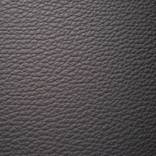 |
Leatherette – Artificial Leather used mainly in chess boxes/cases |
Also, exploring beyond materials, chess enthusiasts can embrace diverse styles. The minimalist chess set captivates with its sleek design, epitomizing simplicity. A storage box for chess pieces ensures elegance meets practicality. For intense competition, the tournament chess set is indispensable, while the opulent marble chess set adds a touch of luxury to the game.


